Blog

jeffreywright3178

Blog

Ask any marathon runner what they fear the most and for the overwhelming number it is ”hitting the wall”. So what does that mean and why do we fear it? If we go back to some basic physiology we eat to provide energy and we store some of that energy away for when we are not eating. Carbohydrates (sugars) are converted to glucose and then stored as complex chains of glucose (Glycogen). Fats are stored via a different pathway and are less available for short term energy requirements.

So we run. After somewhere between 30-35 km at my marathon pace, two hours for some people, a random amount of time for others all of the available glucose is used up. Glycogen stores are depleted and energy runs out. We have now hit the wall.

What’s it like? Not fun. I can describe two methods of hitting the wall neither pleasant.

One. The short, sharp catastrophic ”Oh dear” method of hitting the wall. This one can sneak up and has been described as having a bear jump on your back. Can occur within 400 metres. Running along thinking that this is going ok suddenly evolves into painful legs, laboured breathing and fevered recalculation of how long it is going to take to finish. May or may not have cramping associated just to add to the challenge.

Two. The long slow descent into twilight. I have found this one tends to come after too optimistic estimates of finishing times. Having started too hard and being in a good place at half way or beyond the pace starts to fall away and then slows and slows and slows. It is a more insidious occurrence but no less painful. No amount of goodwill or desperation makes it better.
How can we avoid the wall?
Some runners believe in a conservative pacing strategy, others swear by a nutrition plan. I’ve never been a fan of gels and tablets and drinks during marathons. My tummy tends to rebel after the end if I’ve gone hard and everything that went in reappears. Not pretty. I also don’t like sports drink spilled down my shirt. It’s a bit of a skill to run and drink and if I’m going to wear something I’d rather it was water than sticky drink. The difficulty I have with pacing is that to run conservatively seems pessimistic. At this stage of my career I still hope there is another good one in there sometime. I’m not sure I can make up time in the back half, so I tend to go a bit hard and hope.

One interesting aside from hitting the wall is that, in my case at least, my mind stays active and knows what’s going on but my body does not respond to any of the great running cliches. No pain, no gain? Just do it? Mind over matter? In reply we get, How about F*** off and we go to the pub? What I have found more useful is to come to an agreement with my body along the lines of ”if I don’t try to push you will you get me to the finish line and then we’ll go to the pub ”? So far that has been a deal that has gotten us to the line.
As with so many things the challenge is to keep everything in balance. I have paced the Melbourne marathon a couple of times so I know that in 2021 I could run 3.40 reasonably comfortably carrying a flag and running even splits. (Past performance is no indication of future performance (in superannuation and marathon running)). In that case, although tired at the I didn’t feel that I had hit the wall. Let me add at this point that it doesn’t matter how slow you go 42km is still 42km and will leave you worn out. Hitting the wall is the icing on the cake.

The Major Marathons -Boston

All of the major marathons have their own unique features. Boston is the oldest of them with the first being run in 1897. It is an event for runners which sounds odd for a major marathon but can be appreciated when you arrive in Boston and people in the street ask if you are there for the marathon. The event is held on Patriot’s day, a public holiday and is a point to point marathon. This is another unique feature as all of the city yellow school buses are drafted in to move runners out to Hopkinton from where we run back into Boston.

Boston is surprisingly accessible for anyone who can meet the time qualifying. For us overseas they accept many of the AIMS certified marathons in Australia as qualifying events. That includes all of our capital city marathons and Gold Coast and several others. AIMS is the Association of International Marathons who can certify that a course is the correct length and isn’t too downhill or designed with a generally prevailing tailwind and so on.

The course in Boston starts downhill for the first 4-5 km before passing through a couple of small towns. People gather on front lawns and through the towns to cheer and encourage runners. The atmosphere is always very positive. At 21 km runners pass through the ”scream tunnel” as girls from the Wellsley college gather to cheer. Into the suburbs there is a right turn at the fire station and on to three hills. The third of these is Heartbreak hill. To be honest I didn’t find these hills all that hard but they do come at a difficult point in the event.

Where Boston really stuns is the crowd support coming into town, 3-4 deep and loud. The last two turns put runners up a little hill on Hereford street and then left on to Boylston. This is fantasy land for runners. 800 metres, slightly downhill with the finish kite in sight all the way. People on the grandstands cheering. A sobering reminder is passing the spot where there was a bombing during the running of the 2013 marathon.

One of the great unknowns in Boston is the weather. When I ran in 2015 it was about 7 degrees C. Two weeks prior there was snow on the ground. In 2017 it was 23 degrees C getting on the hot end of desirable for a marathon. It should be remembered that marathons in these cooler climates start later to give the day time to warm up. In Australia we start at 6.00 or 7.00 am to avoid heat and any danger of support (a theme for another blog).

The day after the marathon we went for a recovery walk and to take in the history of Boston. There are many highlights like Paul Revere’s home and sites involved in the American revolution. Each year Samuel Adams brews a special Boston marathon beer. In 2015 it was a very nice golden ale. In summary I think if you asked any runner to name one marathon it would be Boston.

jeffreywright3178

Blog

I had a pretty good training block leading up to Canberra marathon this year but there has been a dearth of lead up races, the last of which was Two Bays, a 28 km trail race back in January. It’s also been a busy time personally as I transition from work to long service to retirement. So things were a bit unsettled as we contemplated aims and desires.

The easiest way to look at these is to set some parameters. What would I consider a par score, below par or above par? Curiously, when we consider that par is a golfing term, below par in common usage would an undesirable outcome whereas in golf below par is a good thing. Anyway, my aims for this year look a bit like this.
Same as last year 3.13? I had a really good run last year so this would exceptional if I could do that again. Above par.

I well know that it is easy to drop 10-15 minutes over the last couple of kms if we hit the wall (the subject for another blog) so I think below par would suggest an unexpectedly poor run. 3.30 plus a poor finish. I paced 3.40 in Melbourne and ran it fairly comfortably so I reckon not being able to race it in time would be below par for me. So there’s top and bottom.
Average of that is about 3.25 so hoping to do a little better I’ll call 3.22 as par.

The course is not an easy one with lots of rolling ups and downs but it is quite scenic running up around parliament house and then around Lake Burley Griffin.

We gathered for a 6.15 am start, right on dawn 15 degree C and after a rev up from Rob DeCastella, the marathon legend we were off. First km too fast, settle a little around parliament house, charge down to the lake. Through 5 km still a bit quick but rolling, probably working a bit more than desirable. Up the hill at 12 km and then we head down one of the peninsulas that jut out into the lake. This was as comfortable as I managed for the whole event. Unfortunately there was still another half to go. Went through the half in 93.48 so still on 3.10-3.12 pace. There will be payback somewhere in the future.

As we crossed over the Commonwealth Ave bridge at 24 km we were caught by the leaders in the half marathon. Having them blow by took a bit of wind out me. I thought I was going ok and having them race by while I was starting to fatigue was a mental blow. Suck it up sunshine, there’s still plenty of running to do. On to the long and winding road that is Parkes Way. It is a slog out to the interchange and back. There is the lake on the left on the way out and the right on the way back so it might be scenic but by now it is really starting to be head down, bum up and get this done. The half runners have a turnaround about a kilometre and a half before ours so we get a bit of quiet time before joining them again. By the time we rejoin them the half runners are relatively slower than us so there is a more positive vibe working through them.
So to the Kings Ave bridge. 37 km down, definitely slowing, the 3.15 pacer came past and I was getting tired and sore. 5 km to go, a spot where the course designers play one of those nasty little tricks and run us away from the finish and around a loop with a little hill in it. Ouch. Fortunately around here Anne and the family had gathered to cheer. Every bit helps at this point. Push, push, try to maintain 5 min/km or better, keep the 3.15 pacer in sight, consider whether 3.20 is possible, acceptable, desirable. Up the pinch and see the finish kite. There’s no sprint in the legs but maybe we can run through.

Finished in 3.17.09.

Today is Monday. I’m a bit sore but not as bad as I thought I would be considering how I felt at the finish. I was pretty spent and had several beers and a debrief with the others from our training group and then was in bed by 9.00 pm. It was a 4.45 am start.

Looking back am I happy? I think so. This was my seventh Canberra marathon and was smack in the middle regarding time. I have three quicker and three slower. I’m older by another year and these things aren’t getting any shorter. My preparation was patchy with a lack of racing and hard, long runs. on the other hand I am only four minutes slower than last year and that falls well within the error limits for marathon running. I don’t know where I finished relative to my age group, the results don’t give that detail but 3.13 was enough to win the age group last year so 3.17 must be competitive. Finally 3.17 qualifies me on time for both the Boston and New York marathons which have fairly stringent conditions. Many marathoners spend their entire careers trying to qualify for these events and never do. So I think satisfied will sum it up. I reckon there is still some life in the legs yet and a good cross country season and consistent winter will see Berlin, London, Chicago as achievable.

Easy week this week and then we evaluate the next block. I think I need one more marathon before September. We’ll check the running calendar and see what fits. Thanks for reading.

jeffreywright3178

Blog

Warning Philosophy ahead.

If

As all scientists know a good hypothesis starts with if. If I observe this then this is the outcome. If the outcome is not what I expect then I must modify my hypothesis to accord with the outcome.

If is a very useful word, it gives us variability, it gives us choice and it gives us a chance to vary our future. If I buy that property, if I take that job .. or not. These are all choices that we make and that guide us in our lives. In some ways if will define our lives. As I get older I can see that some decisions I made were comfortable and not as daring as they may have been if I had been braver. If I had made those decisions I may be wealthier or more famous (or notorious) but would I have been happier, I’m not sure. I’m content with where I am.

If is also useful to reflect. When I was boundary umpiring I was extremely fit but I was occupied by a job, family a new home and sport. If I had run my first marathon at that time could I have broken three hours? My PB sits at 3:07 at 61 years old. Now at 63 is it out of reach if…?

Only

The context of if changes dramatically when we add only. Not a particularly onerous word by itself, only indicates loss or regret when conjugated to if. If only I had taken that job, if only I had moved cities. In the context of running we think of if only as doubt. If only I had put in one more hard run, long run, fun run, any run then I would run better. This is an unprovable hypothesis as are so many. There are too many variables to put a good or bad performance down to only one aspect.

Do

To summarize, if only is a waste of time and effort. Do or Do not, as Yoda would say but own the decision and own the outcome. We head off to Canberra this week for the marathon on Sunday. We will run. We expect to finish. We hope to run well. Whatever happens will happen. There will be no if only..

jeffreywright3178

Blog

Where we’re at this week.

As part of our long term strategy there are fixed points along the way. One of these is the Canberra marathon in April. Wayne and George have run the marathon ten times and so are now considered Griffins. This is the title earned by that group. This year will my seventh and so I hope to join them in a couple of years time.

The Canberra marathon starts outside Old Parliament House, does a lap of New Parliament House and then does a big loop around Lake Burley Griffin finishing just down from the start. The reason we take on the 8 hour drive and the 7 am start is that conditions are usually good with cool temperatures and it gives us a marathon before winter sets in.

This week is one of the tougher ones. A couple of weeks out and we’re trying to get lots of kilometres in but at the same time not cause too much damage. My aim for the week is to complete 100 km of running. Sunday was a long run of 31 km which will be the longest run before Canberra. I’ve completed a progressive increase over the last couple of weeks of 21, 25, 28 and now 31 km. There comes a point where the distance becomes secondary to the time on feet so although we mightn’t run all the way out to 42 km we will spend the same amount of time running as we expect on marathon day. My 31 km was a touch under three hours of running. I’m hoping to finish Canberra around or under 3 hours 20. We’ll see.

Tuesday was track night 8 km of warm up and then 2 sets of 5 x 400m with a 100m float recovery. All done at quicker than marathon pace. A couple much, much quicker. White line fever strikes again.

Wednesday I try to break down to 2 runs. This Wednesday was 10 km around Lysterfield park and then another 10 km later on up on the bike path. Thursday back in the park for another 12 km and Friday which I don’t usually run was a further 11 km down around the roads in Rowville. We have a family wedding on this weekend and I’m not sure when we can fit in a run so better to get it in the bank now than miss out. Saturday is Parkrun and that will get me to 101 km for the week. Job done.

So, is it that important whether I make 80 or 90 or 100 k at this stage? I think there is what may be a placebo confidence effect. When I get to the line on marathon morning there are always doubts. The biggest one is always , Have I done enough? If we can reassure ourselves that everything we wanted to do is done, the boxes are ticked, then if not confident at least we won’t be assailed by niggly, naggly doubts.

Some days are rainbows and unicorns. Others are just rainbows.

Canberra marathon 2021

jeffreywright3178

Blog

Sometimes when we mention to people that we run marathons we get either of two responses.

The first is ”I could never run that far” and the second is “I would like to do that one day”

Let me start with one of those self deprecating statements. There’s nothing special about me. I enjoy a beer and red wine, I breed budgies, I went to work for forty years and am now preparing for retirement. As I said, nothing special. I also have a running habit. I’ve run forty marathons. To some people that’s amazing, to many people it’s so what?


If I asked you to move yourself without mechanical aid from the top of Mount Dandenong to Station pier in Port Melbourne, at the end of that you would have completed a marathon. Yep, 42km and overall downhill. Now for many people that is not a realistic goal but for a surprisingly high number it is achievable. The first consideration that many people don’t talk about is how long should it take ? For me, less than four hours. For a really good marathoner less than three hours. For a world class marathoner closer to two hours. For someone who has never run or even walked the distance it could be anything. Walking pace is about 12 minutes/km so 42 kms would be 42 x 12 = 504 minutes or about 8 1/2 hours without breaks. Be realistic, there is only one Kipchoge for a reason. I am not him. I can live with that. You should too.


For many, the first obstacle is the expectation. ”I wouldn’t want to be the slowest” or ”what if I can’t finish” What if you can? What if you can’t? In the words of Yoda ”if no mistake you have made, losing you are. ”

So what does it take to run 42 km ? I’d suggest before even starting to think about a marathon, start putting aside 30 minutes a day for three days a week and walk or walk/jog to start to build the habit. It can be done at any time of the day but a regular time makes it easier. It’s amazing how people will work around your habit if they know it’s important to you.

Find a friend, join a group. They are out there. Find your nearest Parkrun. You will soon see that runners come in all shapes, sizes and speeds. Discipline is much easier in company. You wouldn’t let your mates down when you know they’ll be waiting for you, now would you.

Time. The first consideration of a marathon program is time. I have run an average of 55 km / week for the last 6 years. Even at what is a fairly brisk overall training pace of 5 min / km that’s 275 minutes a week or 4 1/2 hours of running time every week. That doesn’t count getting changed, getting to and from or getting cleaned up afterwards. It isn’t necessary to jump immediately into these sorts of figures but be aware that there is a significant investment.

We break up our week these days into track work Tuesday, Longish run Wednesday, recovery run Thursday and then competition or long run Saturday and recovery on Sunday. David tends to seven days a week but I find I get too tired so five days suits me better. I am also findinng breaking up my Wednesday into two runs is beneficial.

You too could be the proud owner of one of these.

The First One! Welcome.

jeffreywright3178

Where to start. At 4.50 pm on a Thursday, I’m going to start by going for a run. Back soon.

Done. Nice, easy 12 km around the streets of Lysterfield. That’s the next suburb over from us.

OK. The what, when, who, how and why. I’m leaving why until last, in fact probably not until we get several blogs down the track. It may take some thinking about.

What are we doing?

Three of the world’s major marathons. Berlin, London and Chicago. It just so happens that this year they occur in consecutive weeks. What an opportunity I hear you say. Not quite so simple when the travel and entry requirements are taken into account but those are stuff for other posts.

How?

By jumping on many aeroplanes and doing a complete circumnavigation of the world. We get a lot of help from Andy at Helloworld travel in North Melbourne. There’re many ways to get around but with the added drama of being ready to run we need to key in picking up numbers, recovery runs and COVID protocols in each destination. Oh, and sleep. Sleep would be good too. We’ve already had to adjust our plans once as flights from Japan are affected by the war in Ukraine. We are now going to transit without a stopover through Singapore. It would have been nice to stop but COVID protocols may have caused entry problems in Singapore or Germany so we’ll stick to the KISS principle. (Keep It Simple Stupid).

Berlin marathon, flight to London. London marathon and then to Chicago. We are flying with Finnair so via Helsinki. We have an overnight in Helsinki as we’ve never seen Finland. Chicago marathon and then flying to Portland, Oregon and train down the west coast and flying home to Melbourne from Los Angeles. Simples!

Who?

You’ll get to know several others along the way but the usual suspects are:

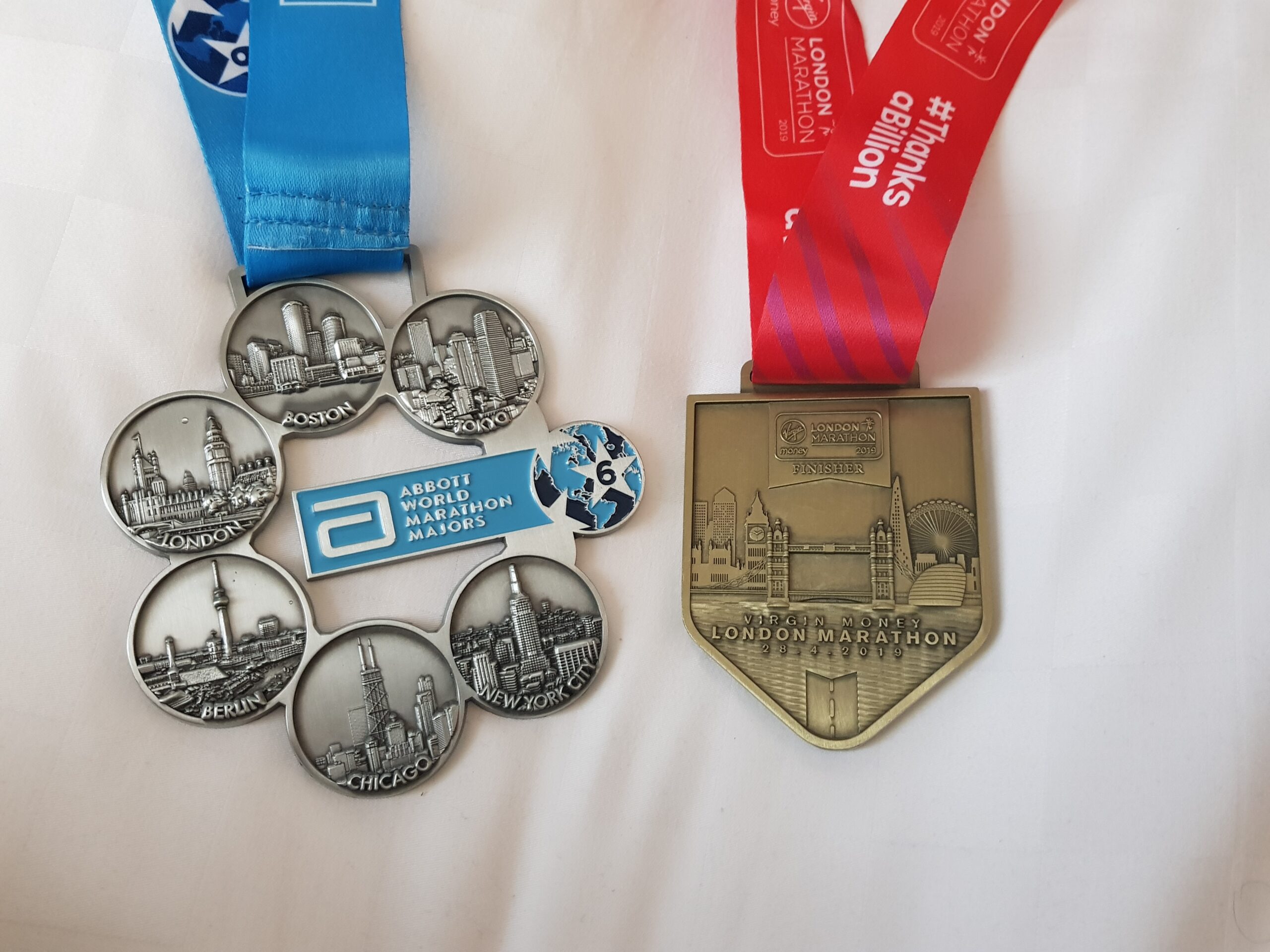
Jeff, that’s me. A mature aged runner with a mature aged red wine habit. I’m currently at 40 completed marathons including the six major marathons of the world. These are the Abbot series and consist of Tokyo, London, New York, Berlin, Chicago and Boston. These were done between 2015 and 2019 so not quite as intense as this series. I’m starting to feel the effects of that much running over the years so we will also be looking at what it takes to keep going.

Anne, the more intelligent part of the partnership. Anne does not run. There is only one full stop at the end of that sentence but if there could have been a couple more there for emphasis there would have been. Anne has the unenviable task of picking up the pieces after marathons and providing positive feedback.

The running group.

Wayno. Every Australian boy needs a shed, they also need a Wayno. Part mentor, part coach and full of stories for those long, long runs. Also a good friend. Wayne has run about 30 marathons using the inimitable Wayno shuffle.

David, A running professional. Give David a session and it will be done. He is also helping me with wordpress so without him this blog might have never taken flight. A relative novice coming up to his fourth marathon in Canberra, David has the fastest P.B. of all of us back in his misspent youth as an umpire.

George, Unbelievable. The guy who suggested this could be done and then thought Oslo the week before and a couple more in the U.S before Chicago sounded reasonable. More than 100 marathons. Now thinking about 200.

I think I’ll stop there as an introduction and see if we can get this up. Welcome to the adventure.